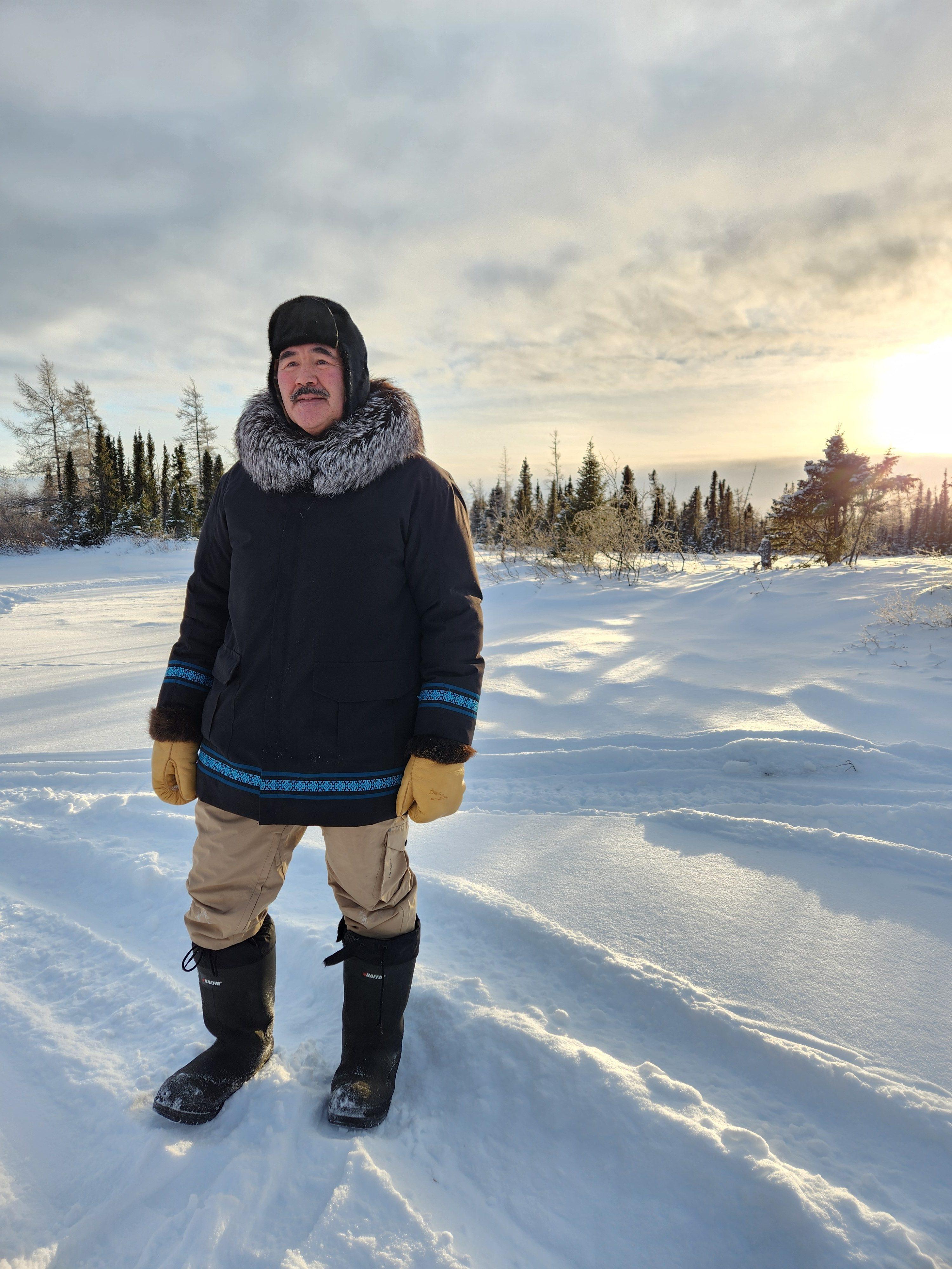
We are pleased to share a summary of the February 2026 Board of Directors Meeting held in Kuujjuaq, given by Larry Watt, Executive Director of UTHC, on CBC North FM Radio.
I am pleased to present you a summary of the Ungava Tulattavik Health Center's Board of Directors Meeting, which was held in Kuujjuaq during the third week of February.
It is my pleasure to take time to share with the community a picture of the progress of Tulattavik’s activities who offers Health and Social Services to our seven Ungava communities.
First of all, three important points directly affecting Tulattavik patients and users and all the Ungava communities.
The first point I would like to discuss with you is the fact that UTHC is facing a shortage of employees. We need your help, UTHC needs the contribution of Inuit to help our families, our neighbors, our friends and all people who call our communities home.
Tulattavik needs Inuit local staff. Tulattavik is actively looking for to hire Inuit employees. If you want to work with Tulattavik to help your community, your family, your friends, I invite you to contact UTHC Human Resources to see the positions available and to offer your services.
HR can be reached by email at: rh.ungava@ssss.gouv.qc.ca or by phone at 819-964-2905 #2462.
My second point concerns the support a patient escort can offer to a person during his or her medical stay at the hospital or when in need to go to Montreal for medical reasons. I understand that this is a very sensitive subject matter. Tulattavik is doing everything in its power to meet the needs of patients, users and families in the granting of patient’s escort and the choice of the person who will accompany the patient to take care of the person and to accompany him or her in times when they are most vulnerable.
I would like to share important information from the Tulattavik Health Center and from Liaison about medical travel and escort support.
When patients need to travel outside their community for medical care, we understand that this can be stressful. Being far from home, sometimes for the first time, is not easy. That is why there is a clear regional policy to support patients who need an escort.
An escort is there to provide care, support, and reassurance during travel and appointments.
In many situations, an escort is automatically approved to escort children, elders over 65, pregnant women travelling for follow-up or childbirth, people with serious or acute health conditions, patients with cancer or suspected cancer, individuals with physical or mental health challenges that affect their autonomy, and also patients who cannot communicate in English or French.
Escorts are also approved when someone is undergoing certain medical procedures or when a person is travelling South for the first time.
To be able to accompany a patient as an escort, a person must be 18 years or older, responsible, and able to provide support during the entire trip. This includes helping with communication, understanding medical information, signing forms if needed, and offering physical or emotional assistance.
In special circumstances, a second escort may be authorized. This decision is carefully reviewed by Liaison to ensure the patient’s needs are properly met.
If families wish to have more than two escorts, additional costs would need to be covered separately. For information, you must communicate with Liaison to talk about your personal and medical situation.
At Tulattavik, we are all working together to ensure safe, respectful, and culturally appropriate care for our Ungava population and communities.
Our goal is to make sure you are supported, informed, and cared for when you are receiving services at the hospital in Kuujjuaq or when travelling for treatment in Montreal.
If you have questions about medical travel or escort eligibility, please contact Liaison Office at 819 964-2905 extension 2394 or 819 635-6721.
I want to thank Mariane Plaisance, a nurse advisor at the Kuujjuaq Hospital, who came to explain to the Board members the expanded role of nurses in communities.
At Tulattavik, we have different kinds of nurses working at the CLSC or at the hospital. Some are public health nurses, homecare nurses, mental health nurses, and community service nurses. We also have expanded role nurses.
Expanded role nurses are experienced nurses who receive special additional training. They are trained to carefully assess patients, ask detailed questions, and do clinical exams. They can treat certain health conditions by following clear medical guidelines called collective orders.
Collective orders are medical protocols prepared and approved by doctors and pharmacists. They explain which medications or treatments nurses can give, and in which situations. These rules also clearly explain the limits of the nurse’s role.
If a health problem is more complex or goes beyond those limits, the nurse will contact a doctor. At any time, if a patient wishes to speak to a doctor, this will be arranged. Your safety and well-being are always the priority.
Expanded role nurses usually spend time training in Kuujjuaq before working in villages. There are usually between two and five expanded role nurses in each community.
Our nurses also do many other important tasks: organizing medications, planning patient travel, ordering supplies, and helping make sure the CLSC runs well.
Expanded role nurses are here to support you, provide safe care, and work closely with doctors to make sure you receive the right treatment at the right moment.
As I pointed out at the beginning of my radio appearance, I am pleased to share with you some of the information that was presented to the members of the BOD by the Nunavik Regional Board of Health and Social Services. The following three points, Implementation of the Nuka System in Nunavik, Substance abuse, and Nunavimmi Ilagiit Papatauvinga Development Plan have a direct impact on Ungava communities and Tulattavik patients and users.
First, let’s talk about the progress of the NUKA system in Nunavik.
I’d like to share an important and hopeful initiative for Tulattavik patients and users: the possible implementation of the Nuka System within our Ungava health services.
The Nuka model was developed by the Southcentral Foundation in Alaska. It is a health system adapted to Inuit thinking, created by Inuit for Inuit.
This health-care model is built on the idea of returning control of the health system to the people it serves. At its heart there is a simple but powerful principle: placing the person and their family at the center of care, while respecting cultural values, autonomy, and community strengths.
This approach places individuals and families at the center of care. It brings together teams of nurses, social workers, mental health professionals, and other caregivers who work collaboratively, focusing not only on illness, but on overall well-being — physical, emotional, mental, and spiritual. Elders play a key role, sharing knowledge and helping preserve culture and tradition.
Traditional medicine and natural treatments are also recognized as important parts of wellness.
The results observed in Alaska have been very encouraging: fewer hospitalizations and emergency visits, higher satisfaction among patients and staff, stronger prevention efforts, and improved long-term efficiency.
Most importantly, the model has strengthened trust between communities and their health system.
Tulattavik considers the Nuka system for patients and users, because it is aligned closely with Inuit values and northern realities. It offers the opportunity to improve access and quality of care, while strengthening community autonomy in managing health and social services.
Of course, this transformation would require time, training, and strong commitment from Ungava Bay's seven communities, and from health and social services professionals, and partners. It is a project that would be developed on many years, but Nuka’s approach can bring meaningful and positive changes early in its implementation.
There is also a desire for Tulattavik to combine the strengths of the Nuka approach with the IQI model to provide even more responsive and culturally safe health and social services. Building local capacity is a key part of the vision — including training and employing local people for roles such as nurses, dental assistants, and other health professionals.
In summary, the goal is clear: to provide appropriate, culturally grounded, and accessible services close to home, supported by the necessary resources and funding. By working together in partnership and respect for Inuit values, we can build a health system that truly reflects our communities and supports the well-being of our people.
Tulattavik wants to share an important message about hope, support, and healing. If you or someone you love is struggling with alcohol, drugs, gambling, or other addictions, please know this: you are not alone, and help is available right here in Ungava region.
At Tulattavik, specialized addiction services for adults are available. In Kuujjuaq, support can be offered one-on-one, as a couple, with family members, or in group settings — depending on your needs. In other Ungava communities, social services teams are available to provide support and guidance.
Across Ungava, prevention and wellness services are offered to youth, adults, and families. There are awareness activities, radio programs, school-based tools, and community events that promote healthy choices and open conversations about substance use.
For those who need more structured support, the Isuarsivik Regional Recovery Centre in Kuujjuaq offers an 8-week recovery program. They also provide outpatient services, pre-care and post-care support, and even healing programs on the land. Most of their services are offered both in person and remotely, so people can access help in different ways.
There is also the Nitsiq+ program, which offers an alternative to incarceration for individuals facing substance-related offenses, helping people focus on healing instead of punishment.
All of these services are working together under the leadership of the Nunavik Regional Board of Health and Social Services to create a clearer, stronger continuum of care for Nunavimmiut — one that respects culture, promotes safety, and strengthens collaboration across partners.
Reaching out for help can feel difficult. But asking for support is a sign of strength. Healing is possible. Change is possible. And services are here for you — close to home, confidential, and respectful.
For better well-being — for yourself, your family, and your community — please use these services. Speak with a person at your local CLSC or at the Kuujjuaq Hospital. Call. Walk in. Start the conversation.
I want to thank Mina Beaulne, Executive Director of Nunavimmi Ilagiit Papatauvinga, who came to present the NIP Development Plan. She shared with the Tulattavik BOD members important news about family and youth services in Nunavik.
Since 2013, Nunavik’s social services system has undergone a major transformation to better support Inuit families. Community consultations led to the creation of Nunavimmi Ilagiit Papatauvinga in 2019. Over the years, Nunavimmi Ilagiit Papatauvinga developed culturally grounded programs, centralized service access, strengthened collaboration between partners, and assumed greater governance responsibilities. By 2025, Nunavimmi Ilagiit Papatauvinga had established independent leadership, formalized regional partnerships, and launched a long-term development plan. This transformation places Inuit values, traditions, and families at the center of services.
The Development Plan has been adopted to build an Inuit-led system to support our children, youth, and families. This Nunavimmi Ilagiit Papatauvinga development plan will take place between 2026 and 2035.
For many years, services were based on a system that did not always reflect Inuit values. Now, we are moving toward a caring system that is:
This change will happen step by step, carefully and safely, so families continue to receive support without interruption.
Some important changes include:
Nunavimmi Ilagiit Papatauvinga goal is to develop new family service centres across Nunavik and trained and hired more Inuit workers. This plan is about self-determination, about caring for our children in ways that reflect who we are as Inuit.
The transition will require strong partnerships, legal agreements, and significant investment. But it is guided by one goal: Healthy children. Strong families. Strong communities.
UTHC encourage the Nunavimmi Ilagiit Papatauvinga program because their main objective is to reshape family services in Nunavik with Inuit values for Inuit children, from birth to adulthood.
Once again, I want to thank all of the Health Board employees who came to Tulattavik’s BOD for presenting programs that will help to ensure the well-being of the inhabitants of Ungava and Nunavik.
I hope that this overview of February BOD helps you to better understand Tulattavik’s actions and activities for the benefit of the population as well as the challenges we face on a regular basis. Tulattavik is always looking for solutions to provide health care and social services that suit the needs of the population.
If you have questions or if you would like to express any views regarding the services offered by UTHC, I invite you to contact the representative of your community who can bring your point of view for discussion at the Board of Directors of the Ungava Tulattavik Health Centre.
For the community of:
Aupaluk – contact Annie Akpahatak Eetook
Kangiqsualujjuaq – contact Sophie Keelan
Kangiqsujuaq – contact Eyuka Pinguatuk Sakkiagak
Kuujjuaq – contact Shirley White-Dupuis
Tasiujaq – contact Pasha Berthe
Feel free to contact your community representative. We are here for you, and for your community!
Tulattavik is looking for a representative for the community of Quaqtaq and a representative for the community of Kangirsuk.
I invite you to contact me personally if you want to represent your community on Tulattavik's Board of Directors.
As an administrator, help Tulattavik giving our population:
Tulattavik is always looking for solutions to provide health care and social services that suit the needs of the population. Be part of the solution, become a Quaqtaq representative or a Kangirsuk representative on UTHC’s Board of Administrators.
Tulattavik needs a community representative on its Board of Directors. If you want to help your community, your family, your friends, I invite you to become a community representative. Helps us with the idea of making Tulattavik better known and to have local employment needs filled up.
For any questions, you can contact me personally at 819 964-2905 extension 2211.
You can also write an email to: dgsecretariat.cstu@ssss.gouv.qc.ca
Thank you for your time and for your interest in Tulattavik’s development of Health and Social Care.
Keep safe and in good health!
Nakurmiik.
Larry Watt, Executive Director